The President of UN-GODI Doron exercises command-in-chief of the UN-GODI Doronian Defence Force (UDDF). Therefore, the President holds the title of Commander-in-Chief of the UN-GODI Doronian Defence Force.
The President ensures there is civilian control of the UDDF, as the President must not have been a serving member of the military for 10 years prior to election. As Commander-in-Chief, the President may issue commands, on the advice of the government, to military officers. However, for most Presidents, the duties of Commander-in-Chief is purely ceremonial with the senior UDDF officers managing operational matters.
History Link to heading
By convention, the President must operate on the advice of their executive councillors. For defence, this is usually done through the Prime Minister or Minister for Defence. However, as was done during the 2025 UN-GODI Doronian–American War by President Dominic Fielding, the President may delegate all powers of Commander-in-Chief of the UDDF to another individual—during the War. General Jack Selangit SD CSC UDA was promoted to the five-star rank of Field Marshal and was given the title of “Field Marshal Commanding-in-Chief the UN-GODI Doronian Defence Force”.
This individual does not need to operate on the advice of the government. When this was done, the President retained the power to override and dismiss the appointed Field Marshal Commanding-in-Chief. Since that war, UDDF doctrine has been changed so that the President would now delegate command-in-chief to a Commander-in-Chief, Operations while the President retains the full command-in-chief.
Rank insignia Link to heading
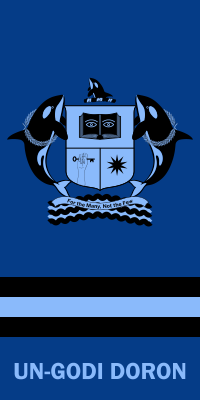
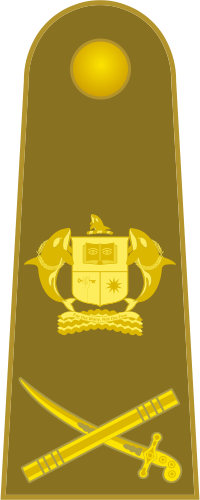
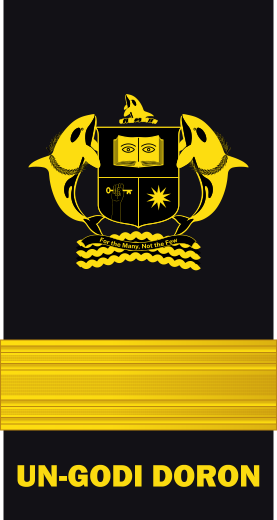
The President cannot be a serving officer of the UDDF. However, as Commander-in-Chief, they may wear the rank insignia of a Air Chief Marshal of the Air Force, Field Marshal of the Army, or Fleet Admiral of the Navy. The President wears the relevant uniform when acting as Commander-in-Chief during ceremonies. In the event that they are addressing all military uniformed services or the Joint Support Service, the President will usually stay in civilian clothing.
The Commander-in-Chief can wear these three rank insignias:
Other Commanders-in-Chief Link to heading
There have been other officers in the UDDF who were titled “commander-in-chief”. These senior officers are usually three- or four-star air, general, or flag officers. Despite their title, these commanders-in-chief were always subordinate to the Commander-in-Chief of the UDDF.
These positions have been in use:
- 2023 Commands
- Commander-in-Chief, Air Force Command
- Commander-in-Chief, Central Doronian Command
- Commander-in-Chief, Donovan Command
- Commander-in-Chief, Doronian Fleet
- Commander-in-Chief, Joint Strategic Command
- 2025 Wartime Commands
- Commander-in-Chief, First Doronian Army
- Commander-in-Chief, Second Doronian Army
- 2025 Post-war
- Commander-in-Chief, Joint Operations Command
- 2031 Consolidation
- Commander-in-Chief, First Doronian Army
Following the 2040 restructure, the Commander-in-Chief, First Doronian Army position was abolished to make way for the revival of the four-star Vice Chief of the UDDF position. With that, there were no commander-in-chief position for the first time since before the 2023 restructure.